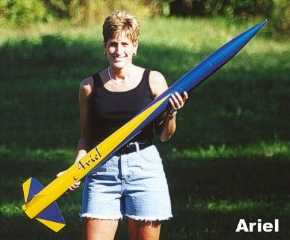
Ariel was ordered from Commonwealth Rockety, in Detroit, Michigan. We hope to see it within a week or two!
Ariel was ordered from Commonwealth Rockety, in Detroit, Michigan. We hope to see it within a week or two!
I’ve added several links that are simulators. They range from complex to overly simple; but all are good for testing ideas about weight, shape, water volume, etc.
After much searching and reading, the Public Missiles Ltd. (PML) Ariel rocket has been chosen. Here are the specifications:
| Dia.: | 3.0″ |
| Height: | 58″ |
| Weight: | 51 oz. |
| MMT: | 54/38/29mm Kwik-Switch motor mount |
http://www.redarrowhobbies.com/kits/Public_Missiles_model_rockets/ariel.htm
It takes G through I motors, which means we can launch it with the G motors without having to be certified by the national certification boards, nor will we need FAA clearance to fly it. This is NOT your fly-in-the-backyard model rocket!
I hope to pick up one before classes start.
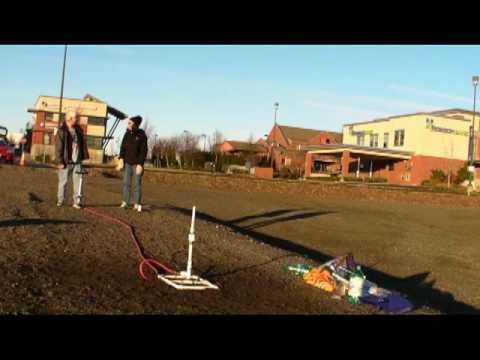
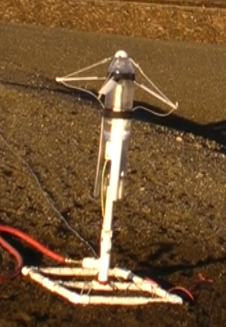
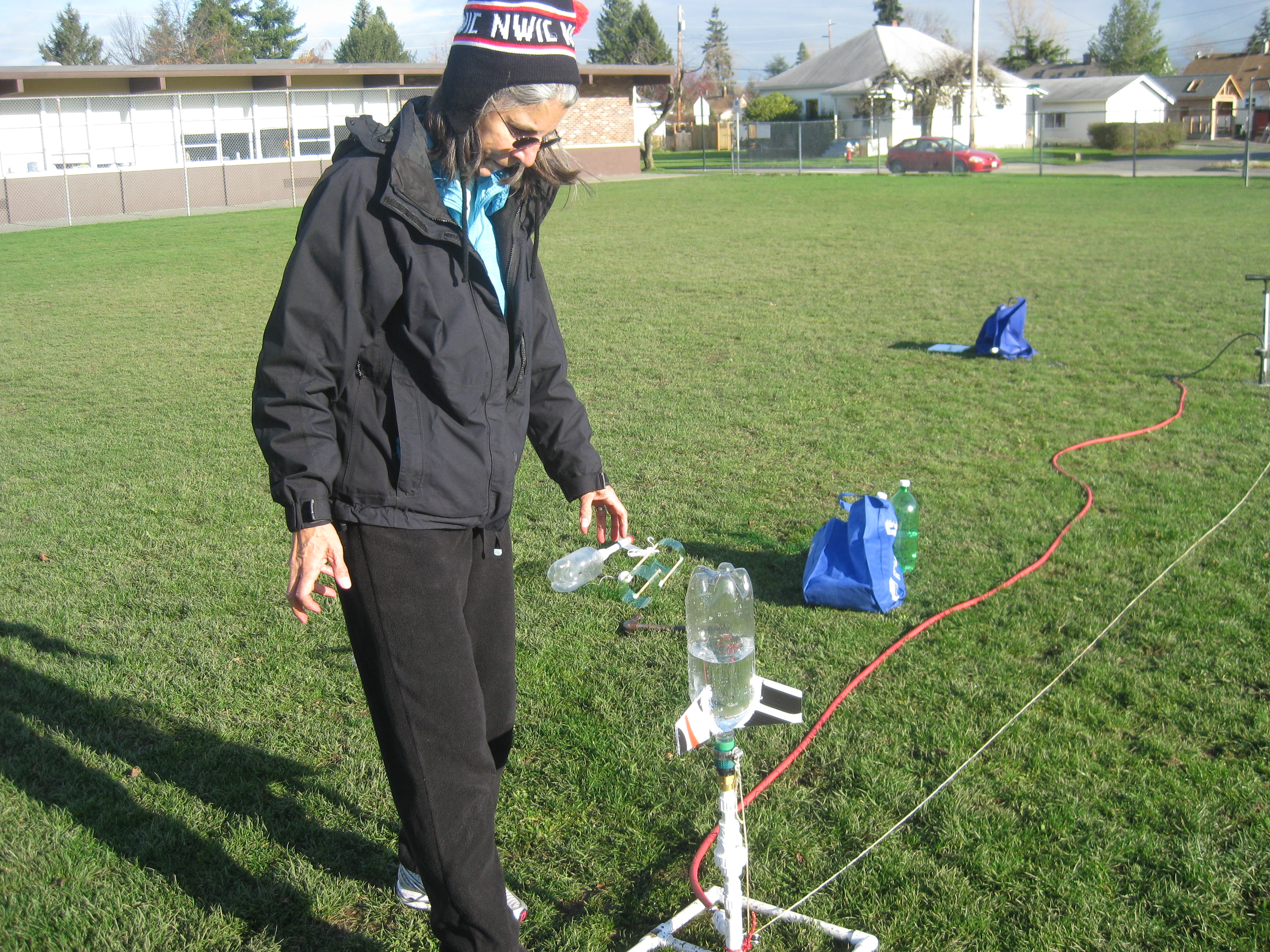
Shelley and I had several launches testing helicopter reocvery and the first attempt at parachute recovery.
The helicopter launched with the blades unfolded. It ascended to about 30 feet, nosed over and then turned upright about 15 feet over the ground. It’s descent was slower than a lawn dart, but it didn’t spin as designed.
The parachute took off and the nose separated from the body at about 30 feet. the body kept going to about 40 feet well down range. The nose and parachute, which didn’t open, tumbled to the ground.
We tried adding a l/8″ launch rod to the gardena launcher to give initial launch stablity to those rockets. The rockets were still unstable at launch and had totally unpredictable flight paths.
Oh, well, as they say, “Back to the drawing boards!”
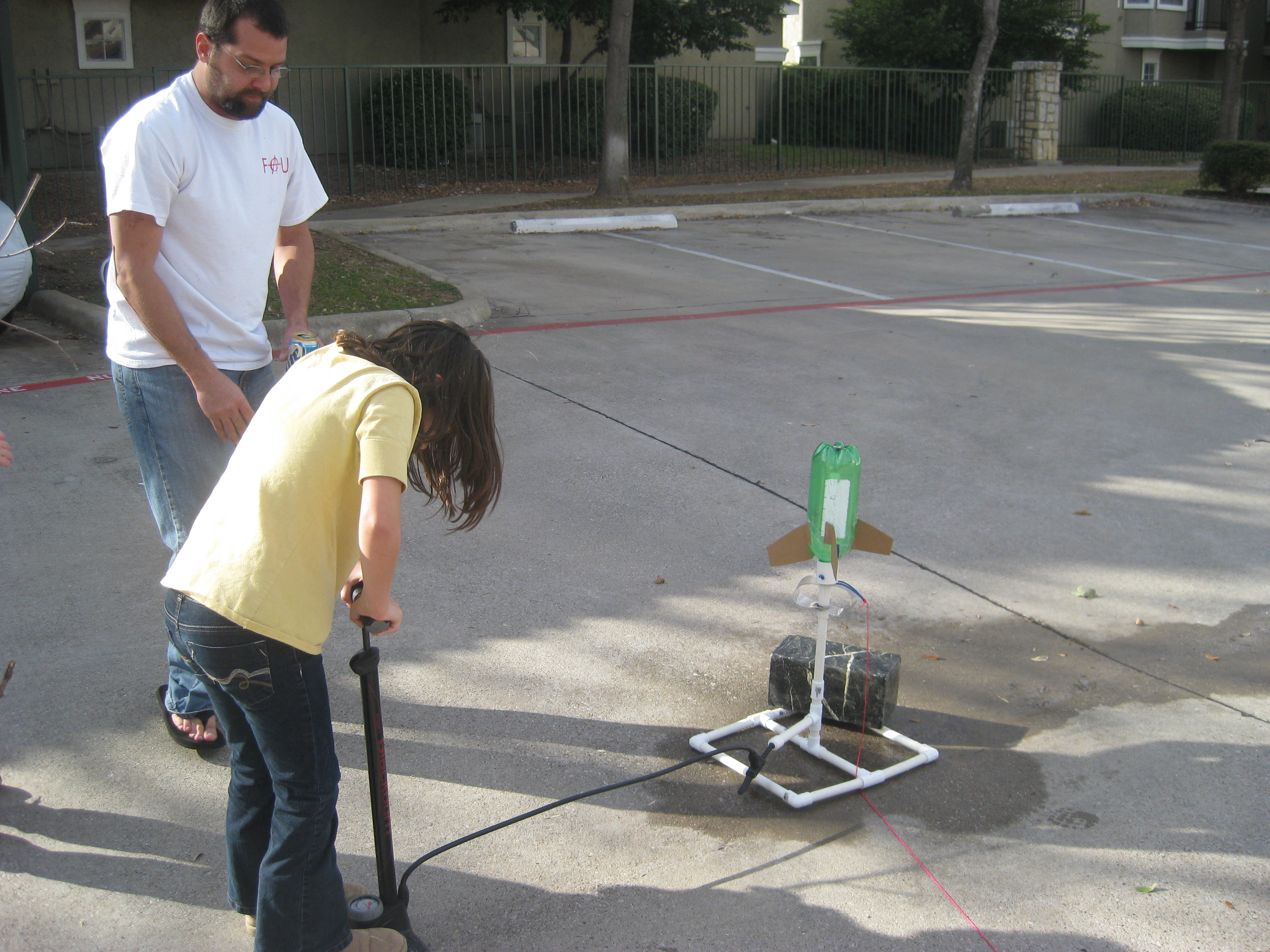
Shelley and I spent the weekend visiting my son, Aaron, and our grandchildren, Stanlee (9), and Corbin (7). For Aaron’s 35th birthday, we gave him the parts to make a launcher. He promptly put it together and commenced launching a bottle. He’s been emailing me several times each day with new ideas. Got him hooked!
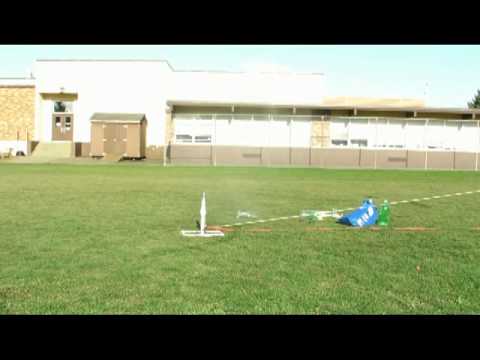
Launches of various rocket designs. Some worked and some sort of worked. One, the Orca, was pressurized to eighty pounds and didn’t fly very straight. In fact, it flew at us in a very erratic path that went over our heads about fifteen feet above ground. The problem is the gardena launcher, which offers no initial guidance in the critical stages of the launch.
NWIC-SC has been invited to participate in the First Nations Launch, http://www.uwgb.edu/wsgc/fnl/index.html. We are a bit behind; however, I am certain that the energy and enthusiasm of our chief rocket scientist, Bob Skaggs, will allow us to catch up and excel!
The faculty advisor for the AISES Club is keen to collaborate with some of our rocketry activites.
We hope to encourage enthusiasm for Science, Technology, Engineering, and Mathematics (STEM) among our students.
Our purpose is to connect with others that are interested in rocket technology.
The NWIC-SC is experimenting with water bottle rockets with a goal of setting a world altitude record for single stage water and air pressure rockets. We are at the very begining of this process; just learing about recovery, CP and CG relationships, drag, and a kazillion other things.