Updates from December, 2010 Toggle Comment Threads | Keyboard Shortcuts

  • Jason 5:38 pm on December 16, 2010 Permalink | Reply  

    Integrating web 2.0 and LMSs « Tony Bates 

    Second, the solution proposed by Mott does not address the main problem with digital learning environments, and that is the way instructors choose to use them, which, as Mott himself convincingly argues, is mainly as an administrative tool and a content depository. No matter how fancy the new digital learning environments, if instructors don’t have an appropriate pedagogical model to guide their course design, the web 2.0 and learner-centered technology functions will just not be used. Too often technology designers believe that technology design will force instructors to use the tools the way the designers think they should be used. It just ain’t so, unfortunately, as the under-use of existing LMS functions, such as threaded discussion forums, illustrates.

    via Integrating web 2.0 and LMSs « Tony Bates.

     
  • Jason 8:23 am on October 22, 2010 Permalink | Reply  

    Making the Case for Space: Three Years of Empirical Research on Learning Environments (EDUCAUSE Quarterly) | EDUCAUSE.

    • Students attending classes in the University of Minnesota’s new, technology-enhanced learning spaces exceeded final grade expectations relative to their ACT scores, suggesting strongly that features of the spaces contributed to their learning.
    • First-year and sophomore students as well as students from metropolitan areas rated the new learning spaces significantly higher than their upper-division and rural counterparts in terms of engagement, enrichment, effectiveness, flexibility, fit, and instructor use.
    • Different learning environments affect teaching-learning activities even when instructors attempt to hold these activities constant.
    • Although assignment types greatly affect the study environments students select, in choosing informal study spaces students fall into routines early and are reluctant to deviate from them even if they are not meeting their study goals.
     
  • Jason 1:16 pm on September 15, 2010 Permalink | Reply
    Tags: ITV,   

    Videoconferencing and First Nations Students – BC Campus 

    Here is a resource provided by BC Campus with ideas and best practices for teaching First Nations students using ITV.

    Because videoconferencing allows people to share their histories, ideas and beliefs with others in distant locations, it can be a powerful way of creating bridges between people who live in different cultural and geographic communities. When using videoconferencing in Aboriginal communities, understanding, respecting and celebrating cultural differences is an important way of creating a trusting and inclusive learning environment so that more of these bridges are formed.

    via First Nations and Videoconferencing | Getting Started.

     
  • Jason 12:51 pm on February 9, 2010 Permalink | Reply
    Tags: , Writing   

    Liberal Education Tomorrow: » Teaching writing in a social media age: one recent example.

    A writing instructor at UT-Dallas explains how and why she has incorporated blogging and digital video into her teaching of rhetoric and composition.

    A strictly digital approach is not for everyone. I will always prefer a paper book, believe memorizing grammar rules is essential, and don’t think everyone needs a blog. Nonetheless, these are issues students should be aware of. Creating work in a vacuum delegitimizes it. When the goal of your course is to teach students to persuade, and you don’t include what is now the most influential tool for disseminating your argument, you are crippling your students.  Writing and reading online is different than performing those same tasks on paper. We communicate differently on the Internet, and as more and more people read from their phones and portable e-readers, our understanding of communication will change further still. As technology shifts, so does our means of persuasion; if students do not explore this, they will find their skills quickly out of date.

     
  • Jason 10:56 am on January 15, 2010 Permalink | Reply
    Tags:   

    2010 Horizon Report 

    New Media Consortium 2010 Horizon Report

    The New Media Consortium just released their 2010 Horizon Report today which outlines emerging technologies and practices that are likely to impact teaching and learning on college campuses within the next five years.  The technologies to watch identified in the report are:

    • mobile computing
    • open content
    • electronic books
    • simple augmented reality
    • gesture based computing
    • visual data analysis
     
  • Jason 9:34 am on December 1, 2009 Permalink | Reply
    Tags: ,   

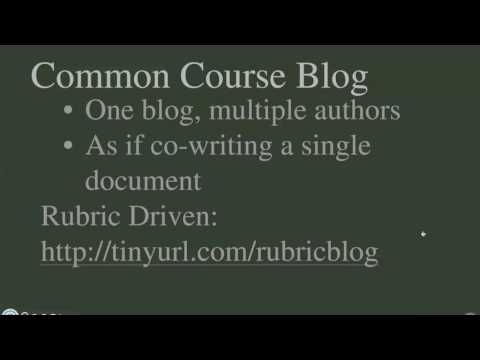
    YouTube – Pedagogy of Blogging

    YouTube Preview Image
     
  • Ted W 3:43 pm on November 25, 2009 Permalink
    Tags:   

    This link leads to an excellent faculty web site from Honolulu Community College with an extensive list of teaching resources and tools. Honolulu Community College’s faculty teaching tips.

     
c
compose new post
j
next post/next comment
k
previous post/previous comment
r
reply
e
edit
o
show/hide comments
t
go to top
l
go to login
h
show/hide help
esc
cancel

Spam prevention powered by Akismet